
Waterproof protection is fundamental to technical outerwear, however keeping water out is only one part of the equation. Managing moisture, maintaining comfort and allowing movement are equally important when developing garments intended for demanding environments.
For Autumn Winter '026, we introduced Toray Dermizax™ across our Stratos and Orion 3-Layer Shells. Developed in Japan by Toray Industries, Dermizax™ is an advanced waterproof-breathable fabric technology engineered to balance weather protection, moisture management and mobility.

What is Toray Dermizax™?
Originally introduced in 1995, Dermizax™ was developed around a hydrophilic polyurethane membrane designed to provide waterproof protection while allowing moisture vapour to escape. Unlike conventional microporous membranes, the original Dermizax™ technology uses a non-porous structure. Rather than relying on microscopic openings to transport moisture, hydrophilic components within the membrane facilitate the movement of water vapour from inside the garment towards the outer surface. This distinction allows the membrane to act as a continuous barrier against liquid water while managing moisture generated during physical activity.
Toray has since expanded Dermizax™ into a broader family of technologies, including microporous variations, with different constructions developed to meet specific performance requirements.


Waterproofing - What's The Score?
The ability to withstand sustained rainfall is measured through a fabric's hydrostatic head rating, expressed in millimetres. Our Stratos and Orion 3L Shells offer a waterproof rating of 20,000mm, providing a high level of protection against heavy precipitation and demanding weather conditions. But waterproof performance extends beyond the membrane itself.
By incorporating Dermizax™ into a three-layer laminate, the outer face fabric, waterproof membrane and protective inner layer work together to create a durable construction suitable for repeated outdoor use.
Understanding Waterproof & Breathability Ratings
Waterproof jackets are often described through numerical specifications. While these figures provide useful technical references, understanding what they measure is equally important.
Our Stratos and Orion 3L Shells share two headline performance specifications: a 20,000mm hydrostatic head and a moisture vapour transmission rate of 30,000g/m²/24h.
TORAY DERMIZAX™ / FABRIC PERFORMANCE
What Does 20,000mm Waterproofing Mean?
Hydrostatic head describes a fabric's ability to resist water pressure before liquid begins to penetrate.
A 20,000mm rating means the fabric can resist pressure equivalent to a 20-metre column of water under the specified test conditions. A higher hydrostatic head generally indicates greater resistance to water pressure. However, this should not be interpreted as a measurement of how long a jacket can remain exposed to rainfall. Effective waterproofing also depends on seam construction, zips, fabric condition and the overall garment design.
What Does 30,000g/m²/24h Breathability Mean?
Moisture Vapour Transmission Rate, or MVTR, measures the amount of water vapour that can pass through a fabric during a defined laboratory test.
A rating of 30,000g/m²/24h indicates a high measured level of moisture vapour transmission, although the result depends on the test method used. In practical terms, breathability is influenced by temperature, humidity, physical exertion and the clothing layers worn beneath the shell. This is why additional features such as underarm ventilation remain important, even when the fabric itself is designed to be highly breathable.
Understanding the Numbers
Waterproof ratings measure resistance to water pressure. Breathability ratings measure moisture vapour transmission. Neither figure alone determines how a complete garment performs in every environment.
Breathability and Moisture Management
Staying dry is not simply a matter of keeping rain out. During physical activity, the body generates heat and moisture that must be managed to maintain comfort. The Dermizax™ construction used in our Stratos Shell delivers a specified moisture vapour transmission rate of 30,000g/m²/24h, helping moisture vapour move away from the body as activity levels increase.
This is particularly important during demanding ascents, extended periods of movement and changing weather conditions, where the balance between protection and breathability becomes critical. Effective moisture management helps reduce the accumulation of humidity within the garment, allowing the wearer to remain more comfortable over extended periods.
Let's Get Moving
A technical shell needs to move with the body, not against it.
One of the defining characteristics of Dermizax™ is its ability to combine waterproof performance with a supple, flexible fabric construction. Toray can tailor material properties, including stretch, texture and weight, to suit different applications. This makes Dermizax™ particularly well suited to garments intended for dynamic movement, where reaching, climbing, walking and layering place different demands on the fabric.


A Considered Material Choice
Performance and material responsibility are not mutually exclusive. Toray continues to develop PFAS-free variations of Dermizax™, exploring alternative membrane technologies and water-repellent treatments.
For PMO, our PFC-free Dermizax™ shell construction reflects an approach to fabric selection that considers both technical performance and the materials used to achieve it. It is part of a wider commitment to exploring textile innovation without overlooking the environmental considerations associated with technical apparel.
Dermizax™ Within Purple Mountain Observatory
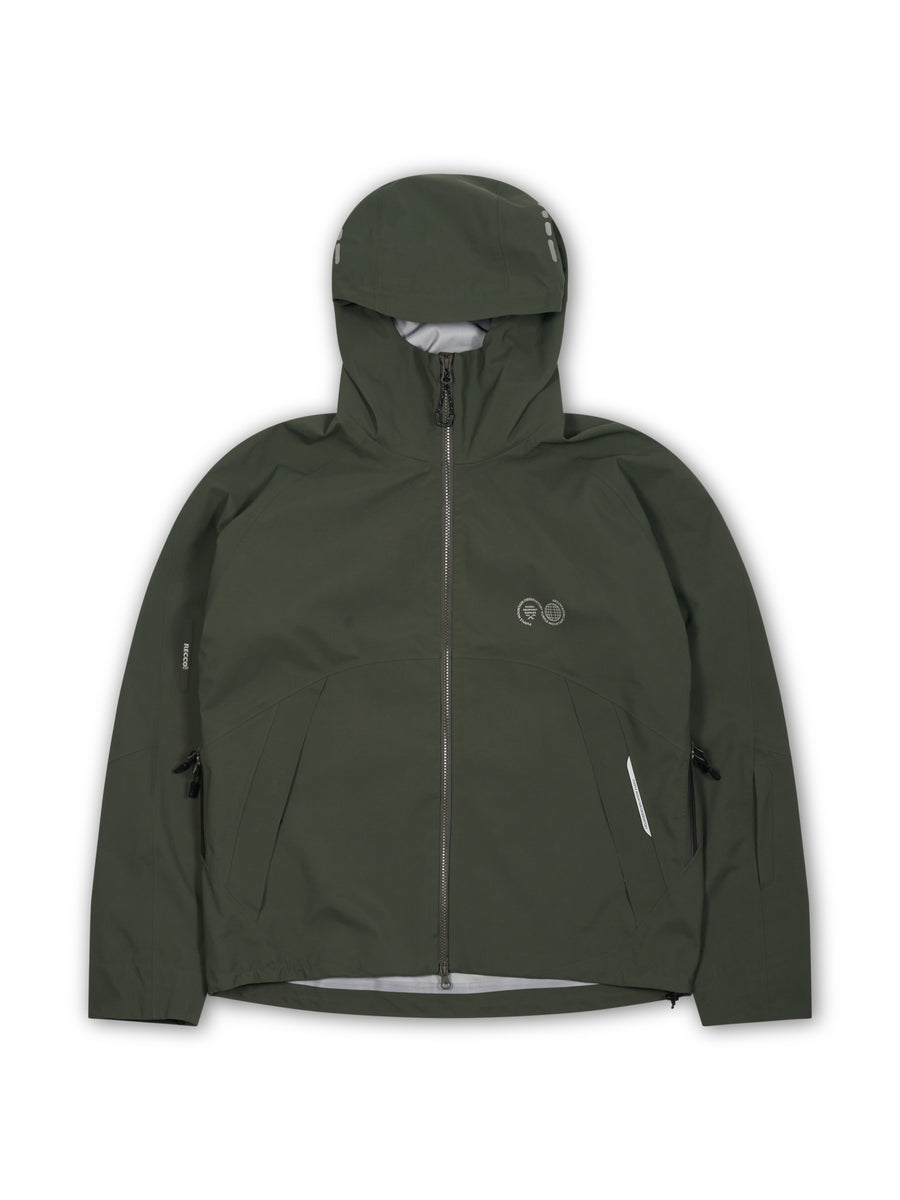
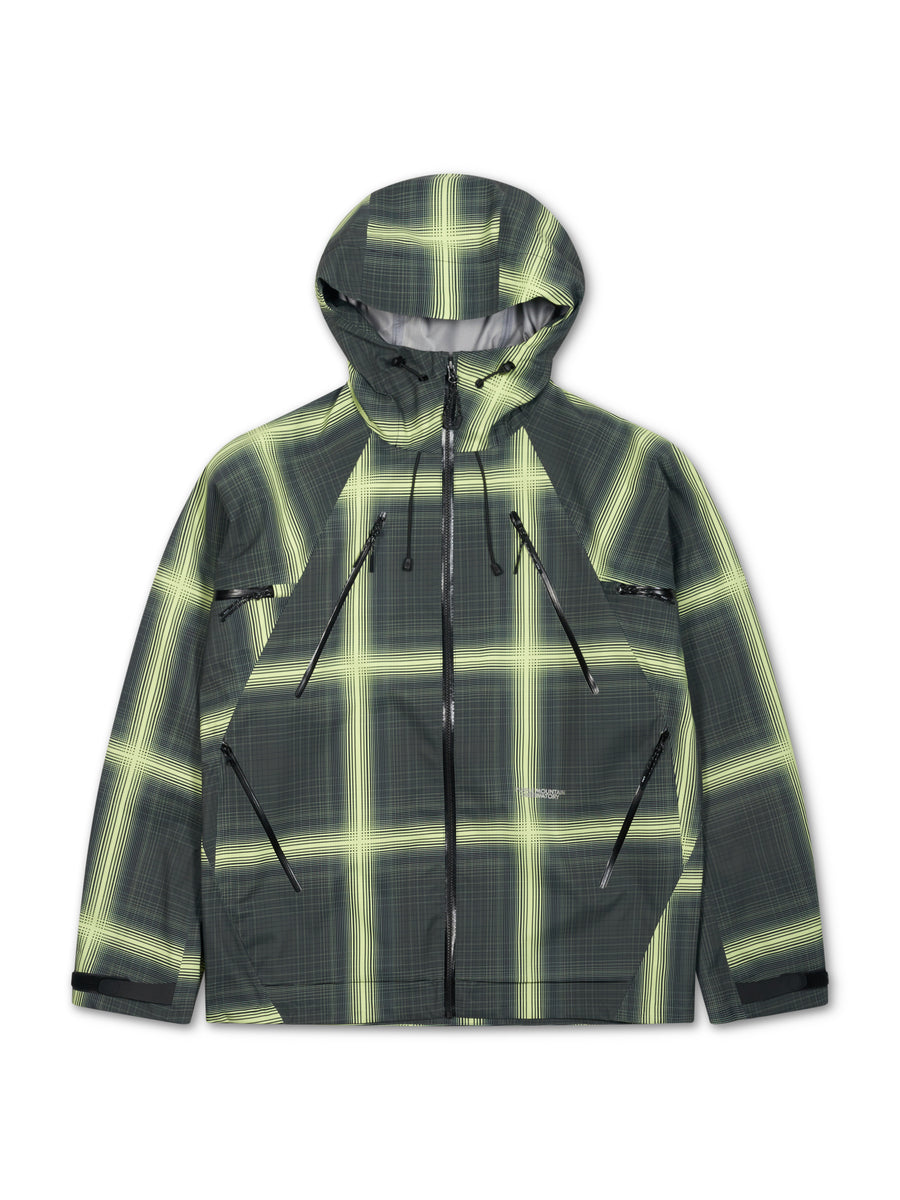
For AW26, we introduced Dermizax™ across two distinct silhouettes: the Stratos 3L Shell and Orion 3L Check Shell.
While each garment presents a different visual approach, both are built around the same principle: technical performance should be integral to the design, not an afterthought. The Stratos is developed with a focus on all-weather protection and mountain functionality. The Orion explores the relationship between technical materials and contemporary outerwear, bringing weatherproof construction into a more distinctive visual form.
Together, they represent our continued exploration of functional fabrics and their place within modern outdoor clothing.
PMO / TORAY DERMIZAX™
Explore Our Dermizax™ Shells
Two approaches to waterproof outerwear, developed around the same advanced fabric technology. Explore the Stratos and Orion 3L Shells below.

How to Care for Your Dermizax™ Shell
A waterproof shell is designed to provide protection through repeated use, but maintaining its performance requires appropriate care. Over time, dirt, perspiration, oils and repeated wear can affect the outer fabric's water-repellent finish, reducing its ability to shed moisture effectively.
Regular maintenance helps preserve the comfort, functionality and useful life of a technical garment.
01 / Wash When Necessary
Follow the garment's care label and use an appropriate technical garment cleaner or mild detergent where permitted.
Avoid fabric softener and harsh cleaning treatments that may affect the material or its finish.
02 / Maintain Water Repellency
Waterproof shells commonly feature a durable water-repellent treatment, known as DWR, on the outer face fabric.
This treatment encourages water to bead and roll away rather than saturating the outer textile.
When water stops beading, the finish may require cleaning or restoration.
03 / Restore the DWR Finish
Cleaning may help restore water beading when contamination is the cause.
Where the garment's care label permits it, follow the manufacturer's guidance for reactivation or reapplication of a suitable DWR treatment.
Do not assume heat treatment is appropriate for every technical garment.
04 / Protect the Membrane
Avoid unnecessary abrasion, excessive heat and improper storage.
Make sure garments are clean and completely dry before storing them for extended periods.
Regularly inspect seam tape, closures and high-wear areas for signs of damage.
Does Losing DWR Mean a Jacket Is No Longer Waterproof?
Not necessarily.
The DWR treatment and waterproof membrane perform different functions. DWR helps prevent the outer fabric from becoming saturated, while the membrane provides the primary barrier against liquid water.
When the face fabric becomes saturated, often described as wetting out, the jacket may feel colder and less comfortable even if the membrane remains waterproof.
Understanding this distinction helps prevent unnecessary replacement of garments that may simply require cleaning and maintenance.
Built to Last
Appropriate care is essential to technical performance.